OLA · CASE STUDY 01
Debit Card Payments
Opening up card payments at ride-hailing scale — with a fraud-capture flow that never touches trusted riders.
TIMELINE
2018
ROLE
Senior Product Designer
TEAM
Payments & Ola Money
PLATFORM
iOS · Android
OVERVIEW
Trust, at the scale of millions of rides.
Debit card payments at Ola were deferred — the company trusted riders to settle up after the ride ended. Most did, promptly. But some took the ride and simply never came back to pay. As card payments needed to grow, that quiet leak of unpaid rides became a problem worth designing around.
THE CHALLENGE
A regulator forced the question.
Ola Money — the in-app wallet — carried most payments alongside cash. Then the Reserve Bank of India mandated KYC verification for every digital wallet. Riders who wouldn't verify would lose wallet access, which meant one of two things: a sharp dip in rides, or a spike in cash. To absorb the shock, Ola needed to grow debit and credit card acceptance — and pair it with a robust way to capture fraud.
IDEAS
Four ways to secure a card payment.
We weighed several approaches — each trading security against friction.
01
Upfront authorization
Authorize the card before the ride, guaranteeing the charge can be settled.
02
Pay within 15 minutes
Require payment shortly after the ride begins, while intent is still fresh.
03
Pay before it ends
Prompt for payment during the ride, a few minutes before drop-off.
04
Fall back to cash
If no payment lands, convert the ride to cash rather than leave it unpaid.
The concern underneath all four: how do we secure the untrusted case without punishing the millions of riders who always pay?
EXPLORATIONS
Mapping the journey, then the screens.
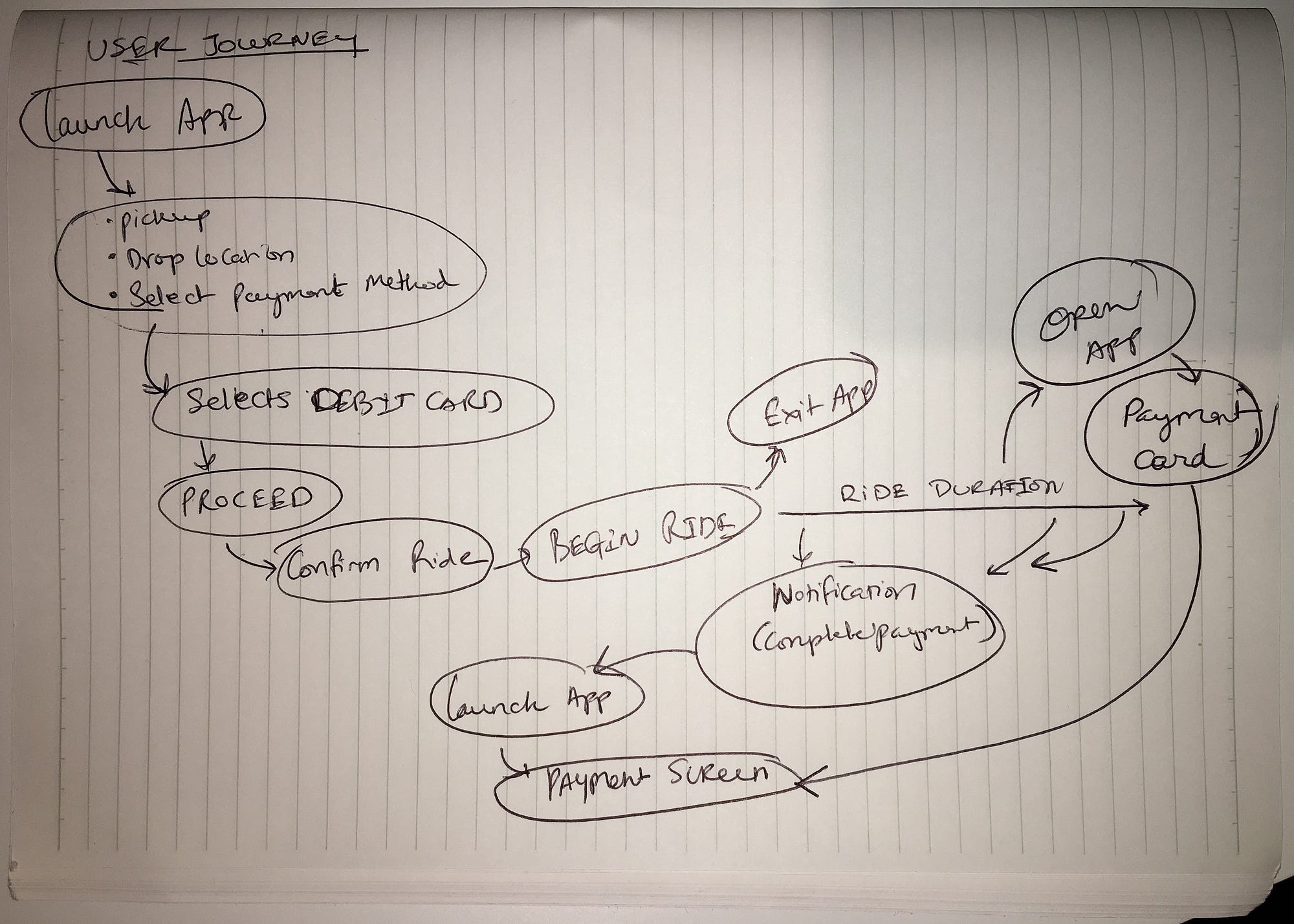
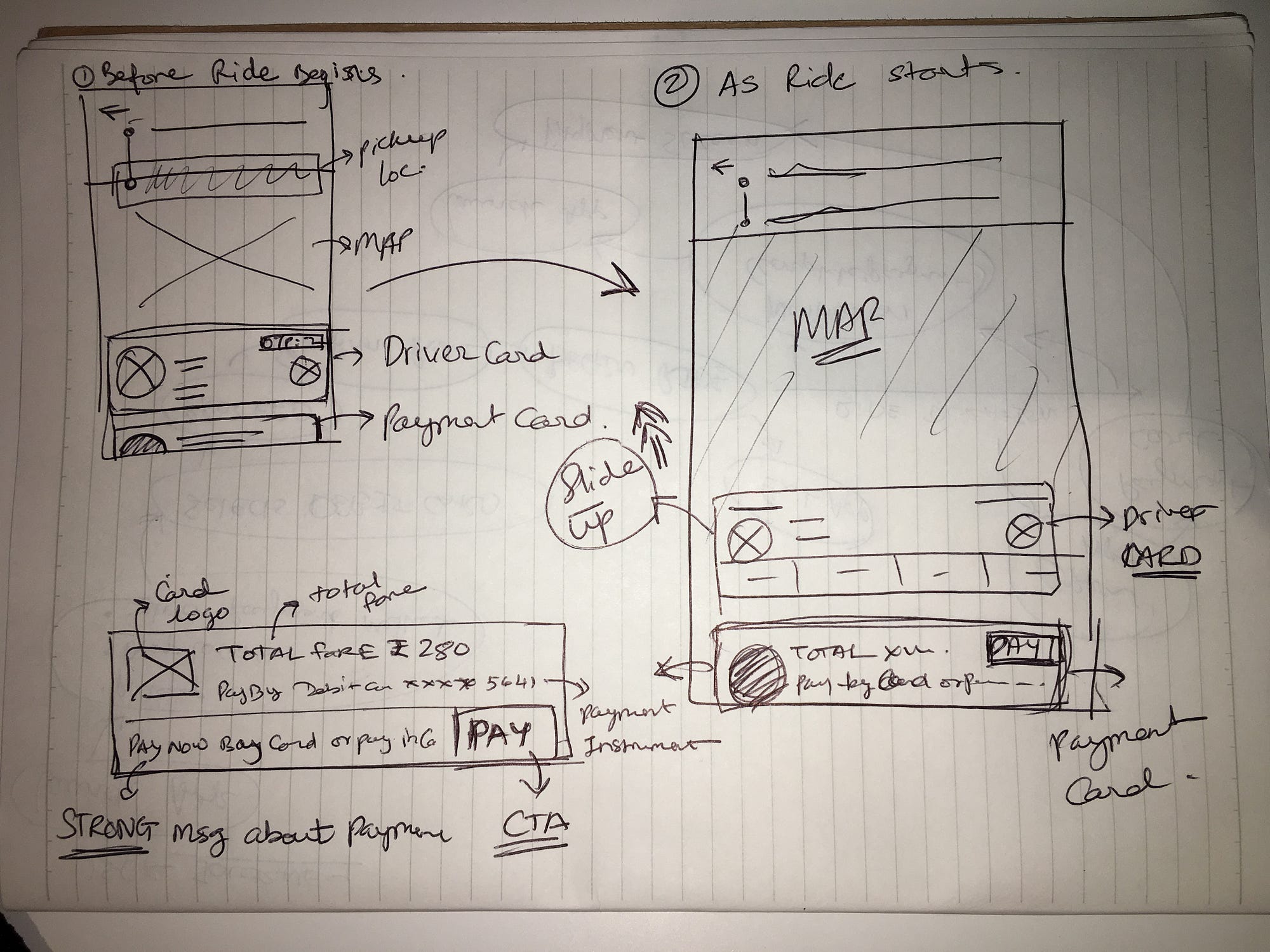
I mapped the full user journey — from launching the app and selecting a debit card, through the ride, to the payment moment — then sketched the screens where payment status had to be unmistakable.
TRUSTED USER
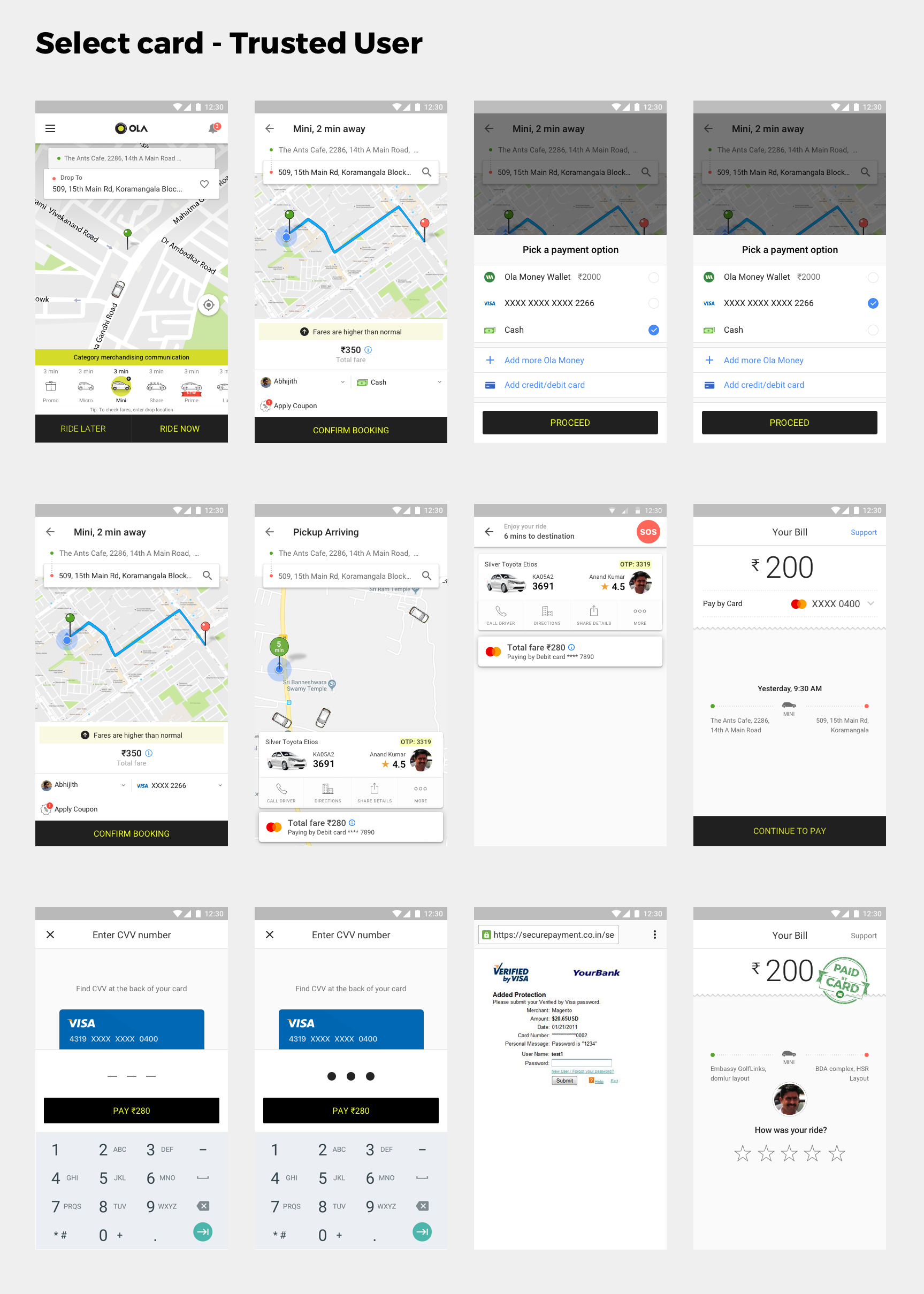
For most riders, nothing changes.
The final approach split riders by risk. A trusted rider picks a debit card, rides, and pays after — exactly as before. The card, CVV entry, and bank verification sit quietly in the background; the experience stays effortless because it was never the problem.
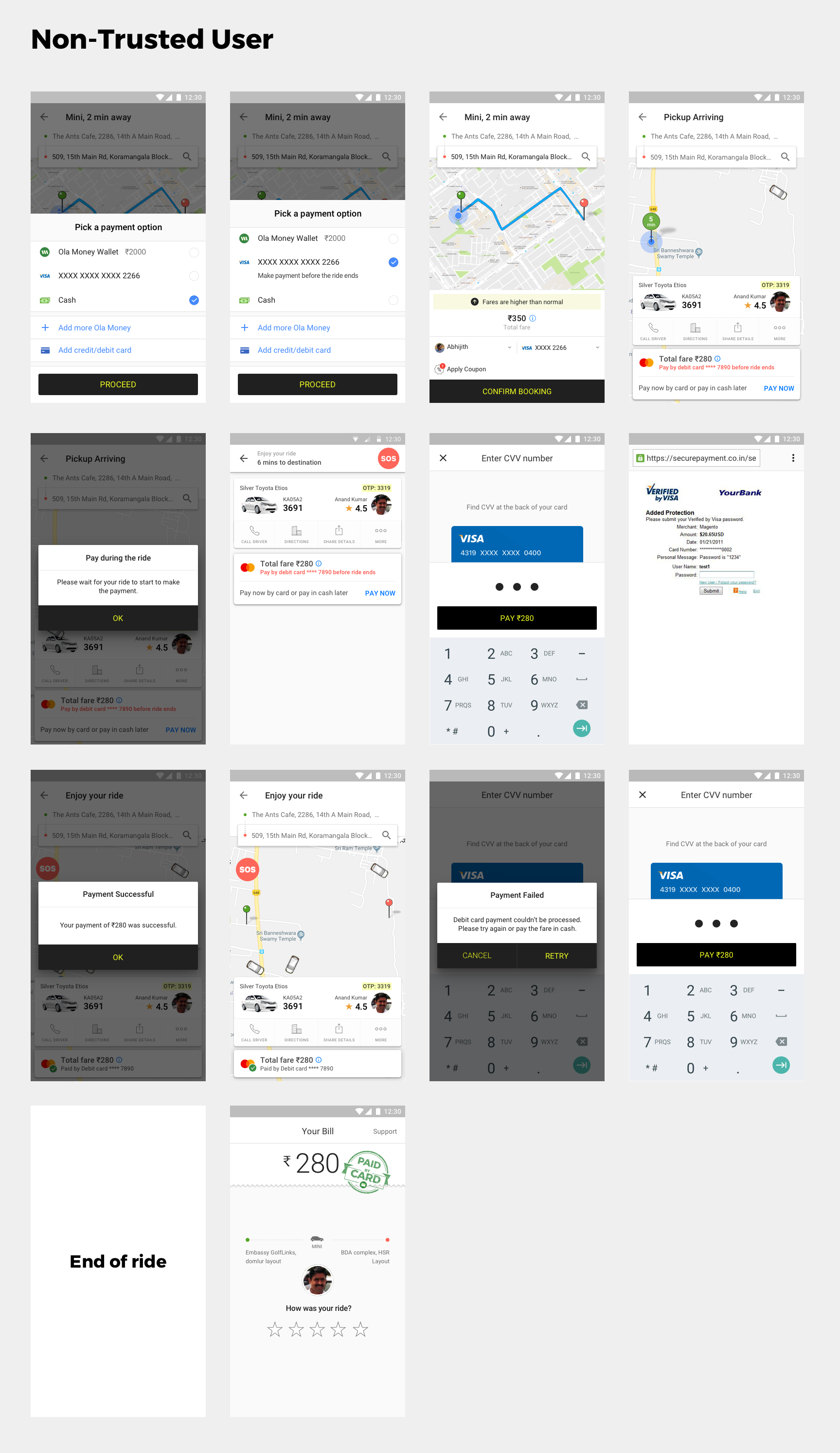
NON-TRUSTED USER
For the risky case, pay before you ride.
An untrusted rider is asked to pay before the ride ends — with clear prompts, a "pay during the ride" nudge, and honest failure states that offer a retry or a graceful fall back to cash. The friction lands only where the risk actually is.
NOTIFICATIONS
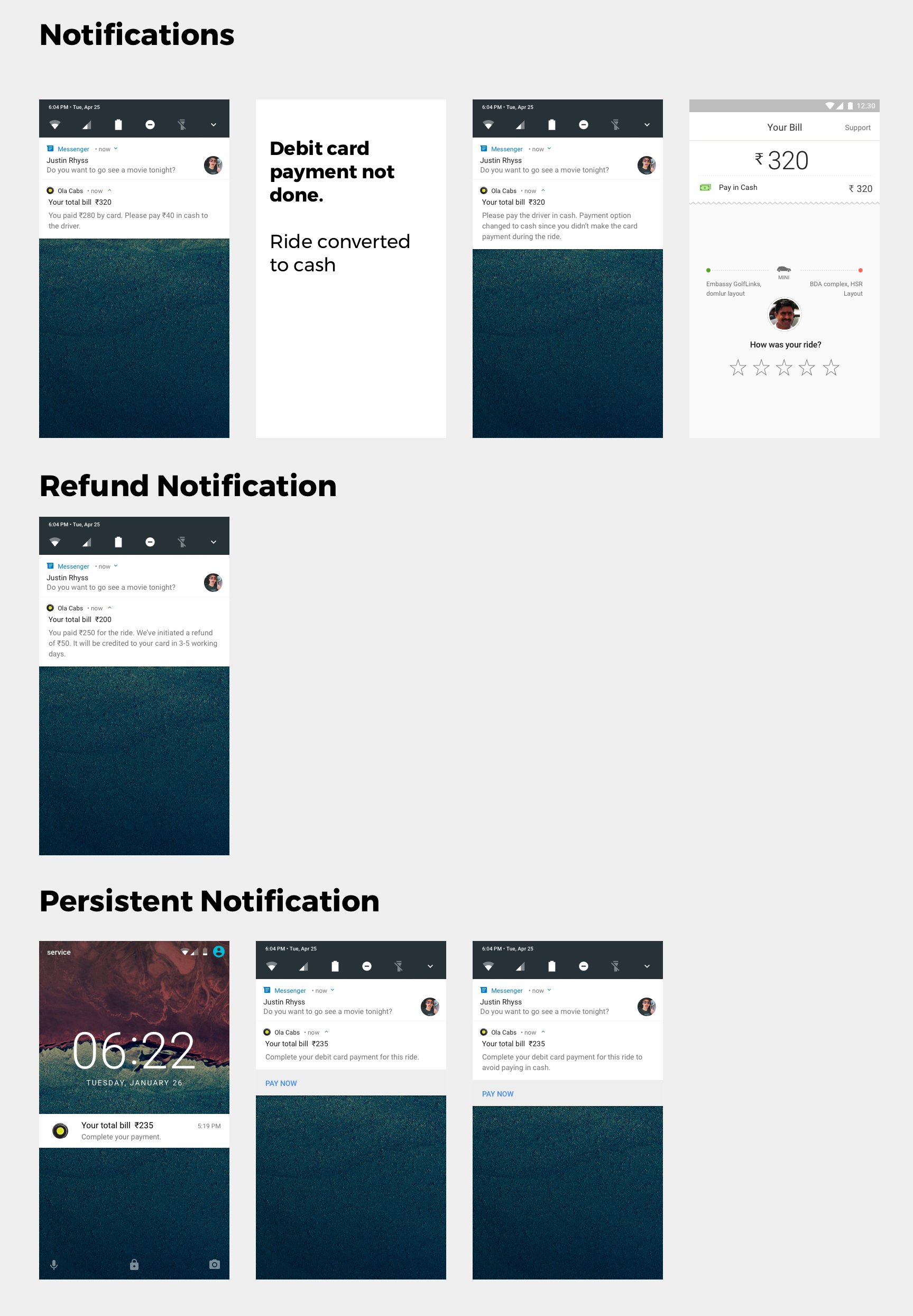
Keeping payment top of mind — kindly.
Payment status lives as much outside the app as inside it. I designed the supporting notifications: reminders to complete a card payment, a persistent nudge, an honest "ride converted to cash" message, and refund notifications for overcharges — each written to inform, not scold.
PAYMENT STATES
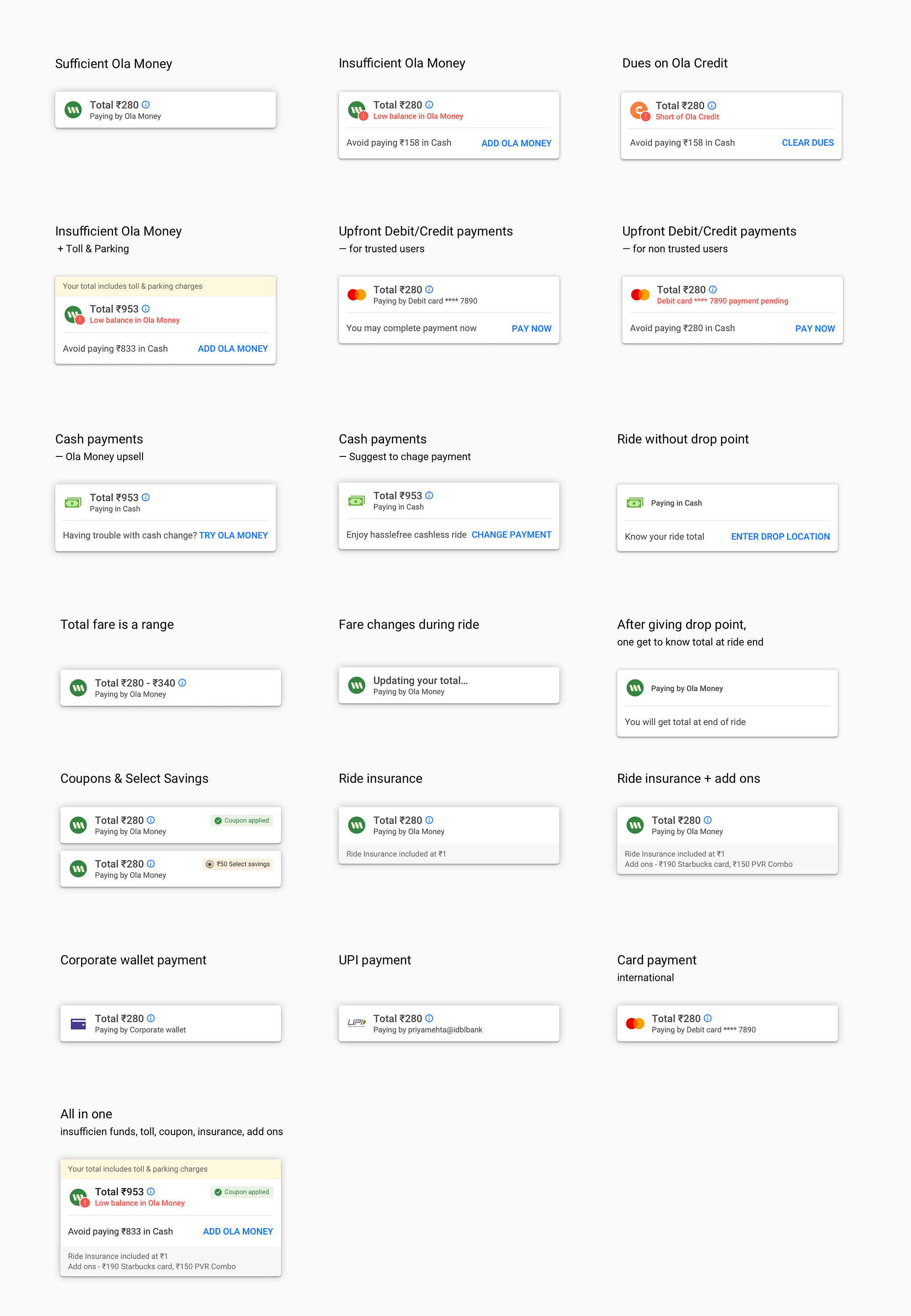
One component, every real-world state.
Payment is never just "pay." I designed the payment card as a system covering the messy reality: sufficient and insufficient Ola Money, upfront card for trusted and non-trusted riders, cash with wallet upsell, fare ranges, tolls, coupons, ride insurance, corporate wallets, UPI, and international cards — down to the all-in-one case with everything at once.