FLIPP · CASE STUDY 02
Item Share
Turning a shared deal into a reason to install the app — location-aware, and honest about price.
TIMELINE
2019
ROLE
Senior Product Designer
TEAM
Growth Hack squad
PLATFORM
iOS · Android · Web
OVERVIEW
A share that lost the deal along the way.
Sharing an item on Flipp should be a small act of generosity — "look at this price." But the old share had no deep linking and presented confusing information: prices that didn't apply where the recipient lived, deals that had expired, links that led nowhere useful. I set out to make sharing contextual and actionable, anchored to each person's real location.
THE CHALLENGE
Make sharing drive installs.
This lived on Flipp's Growth Hack squad, with new-user acquisition as the KPI. Sharing was almost unused, and when it happened it rarely converted.
01
Barely used
Under 1% of users ever shared, only flyer items were shareable, and organic installs from shares were minimal.
02
Wrong place, wrong price
The system couldn't match an out-of-area item to a local equivalent, so recipients saw prices that didn't apply.
03
Dead ends
Recipients rarely opened shares or converted, and retailers had "dark weeks" with no fresh content to land on.
04
No path for non-users
A shared link gave someone without the app no real reason — or route — to install and see the deal.
EXISTING FLOW
Share a link, hope for the best.
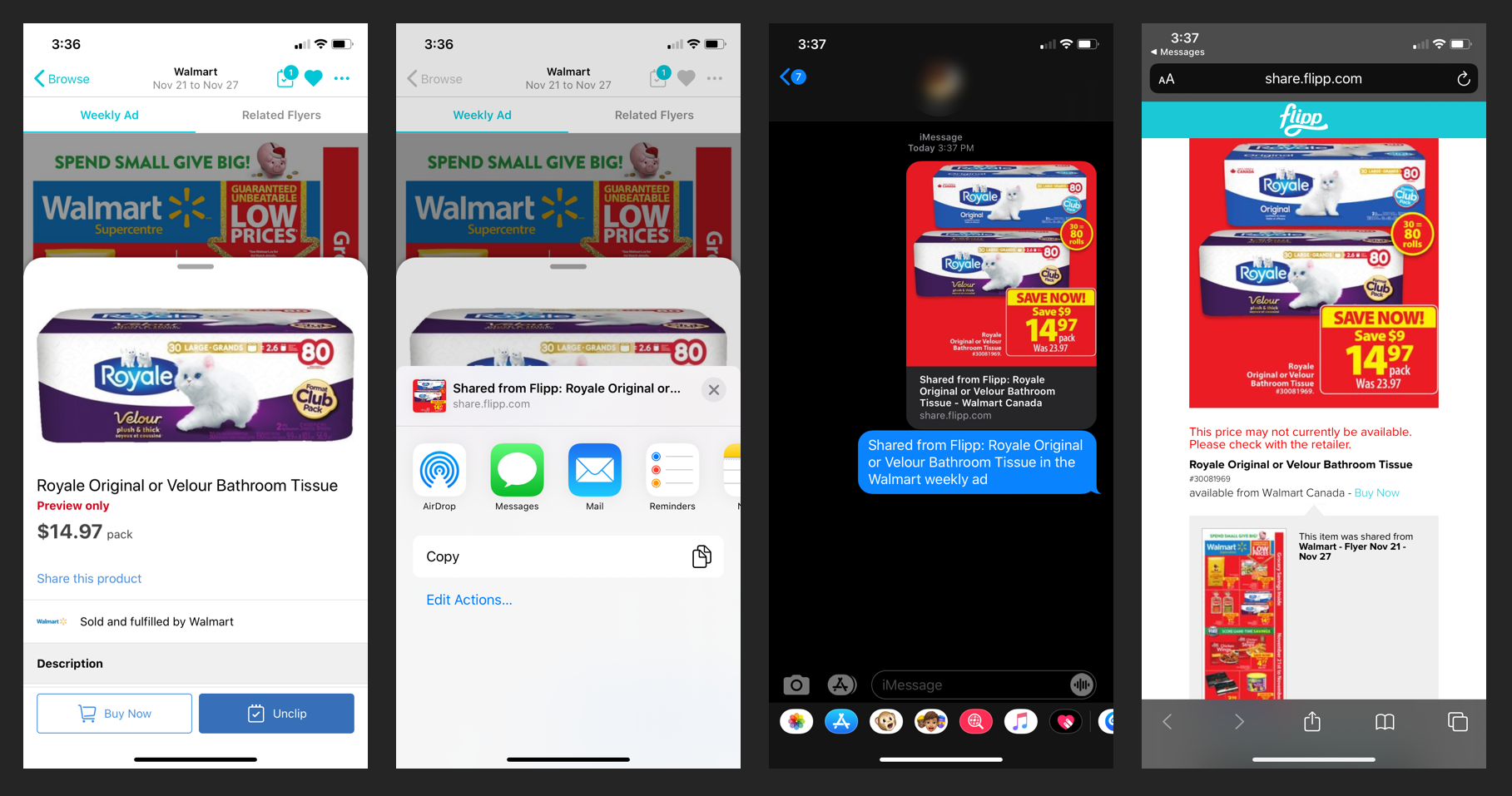
The old share pushed a generic share.flipp.com link. Open it somewhere else and you'd often meet "this price may not currently be available" — the exact opposite of the confident "here's a great deal" the sender intended.
EXPLORATIONS
Mapping who's sharing what, and from where.
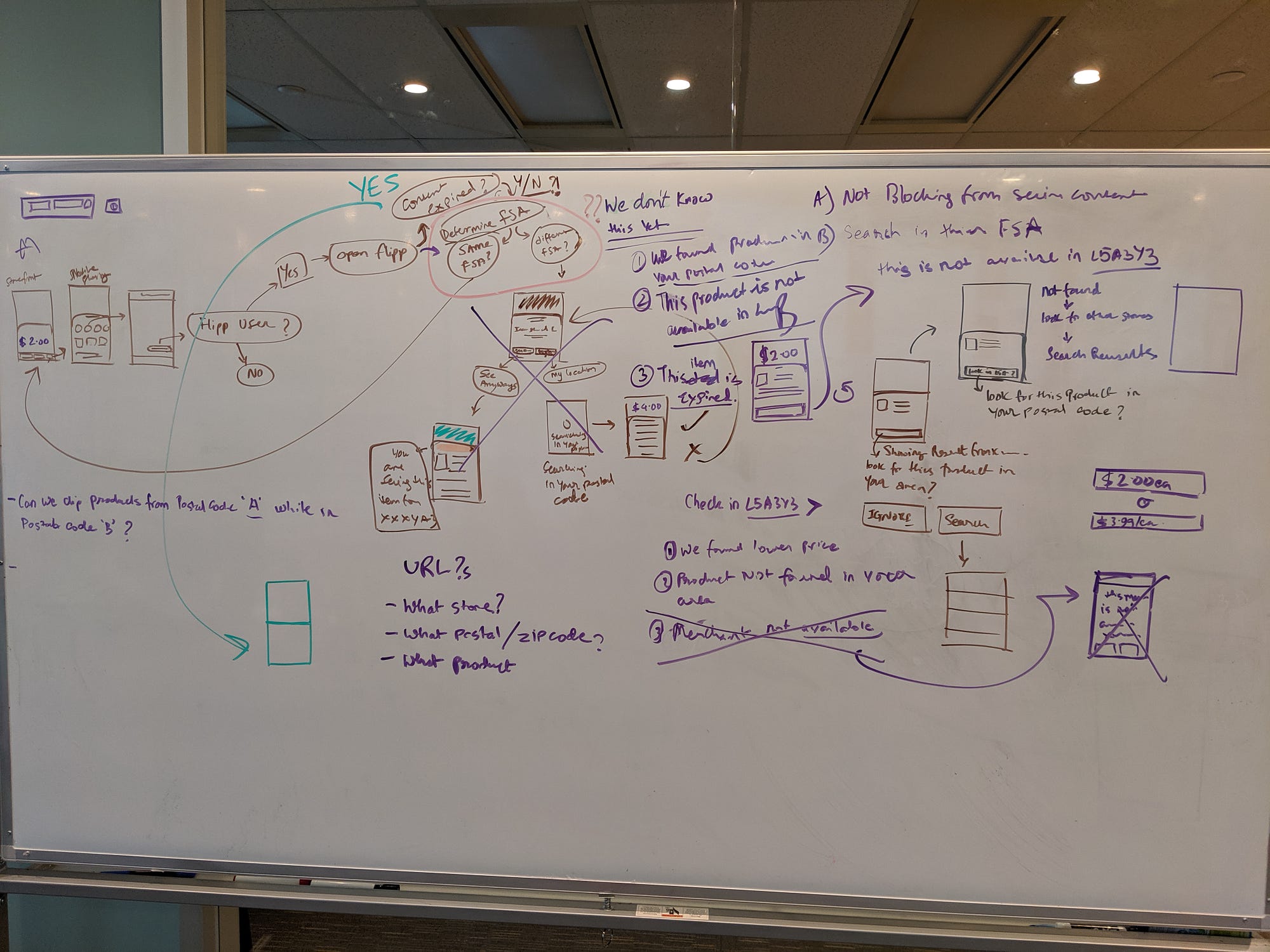
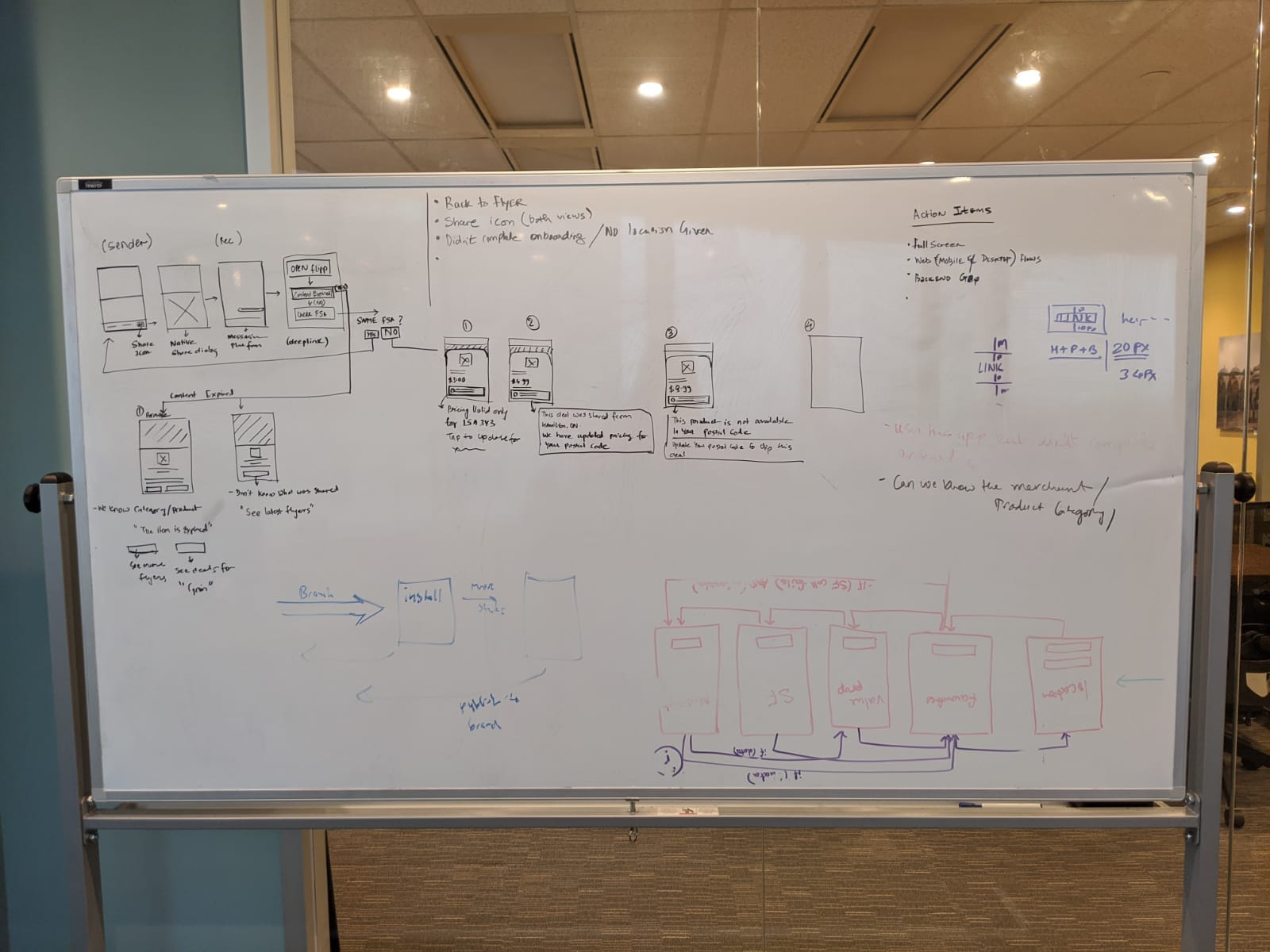
I started at the whiteboard, mapping every combination: sender and recipient in the same postal code or different ones, content fresh or expired, recipient a Flipp user or not. The hard question underneath it all — can we show a price from postal code A to someone standing in postal code B? — drove the whole design.
DESIGNING THE CASES
Same place, different place.
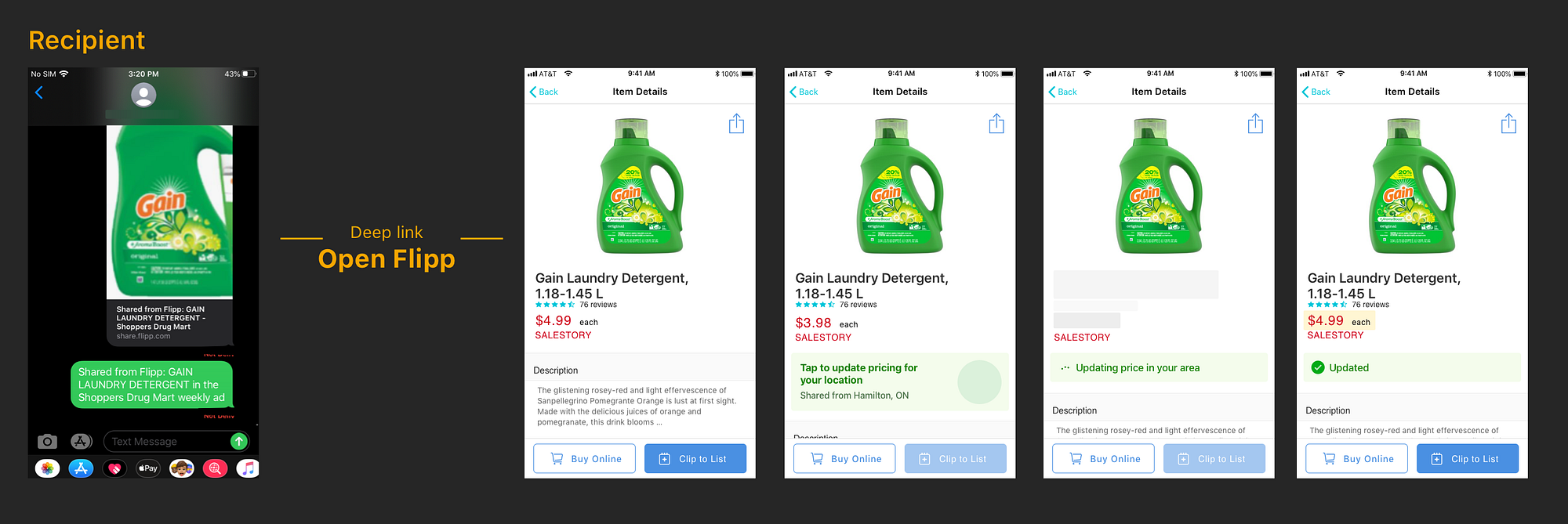
Case 1 — same postal code, product available: the simplest path. The recipient deep-links into Flipp and sees the same price and availability the sender did.
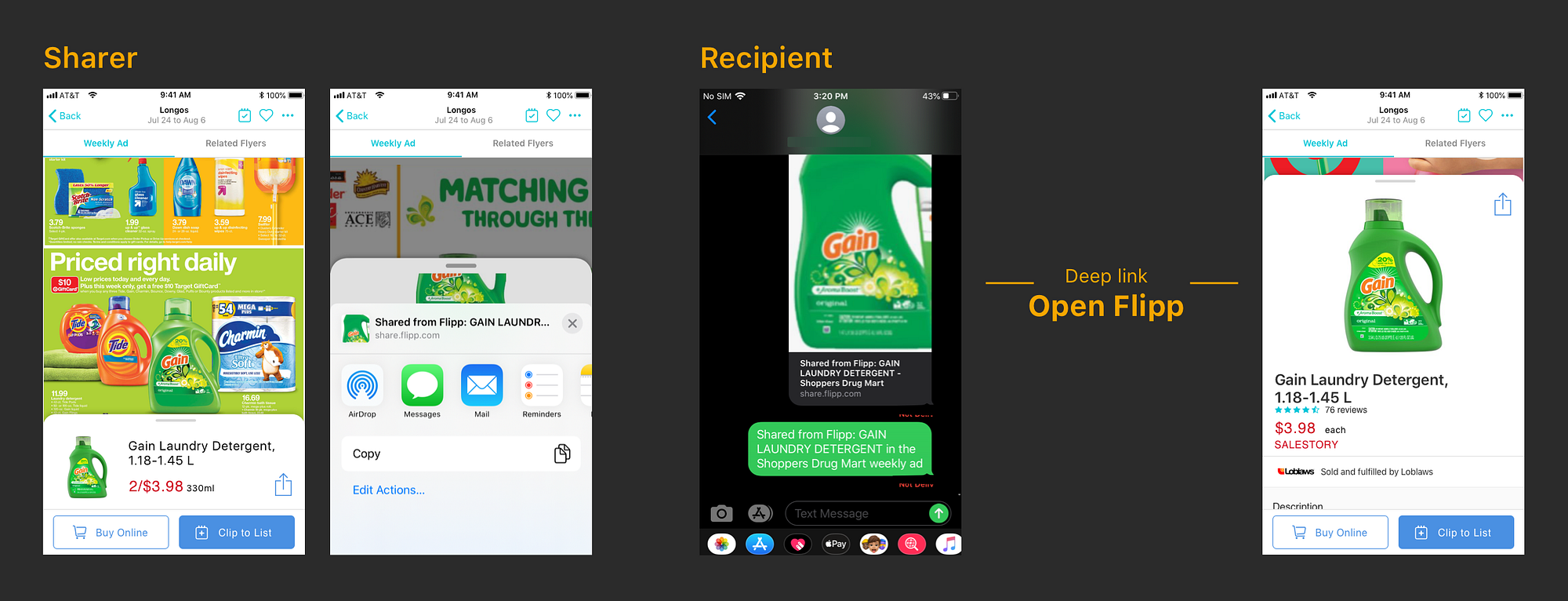
Case 2 — different geographies: prices vary by region, so instead of showing a number that might be wrong, the recipient can update pricing for their own location and keep the experience intact.
CONSTRAINTS
Design the ideal, ship what's buildable.
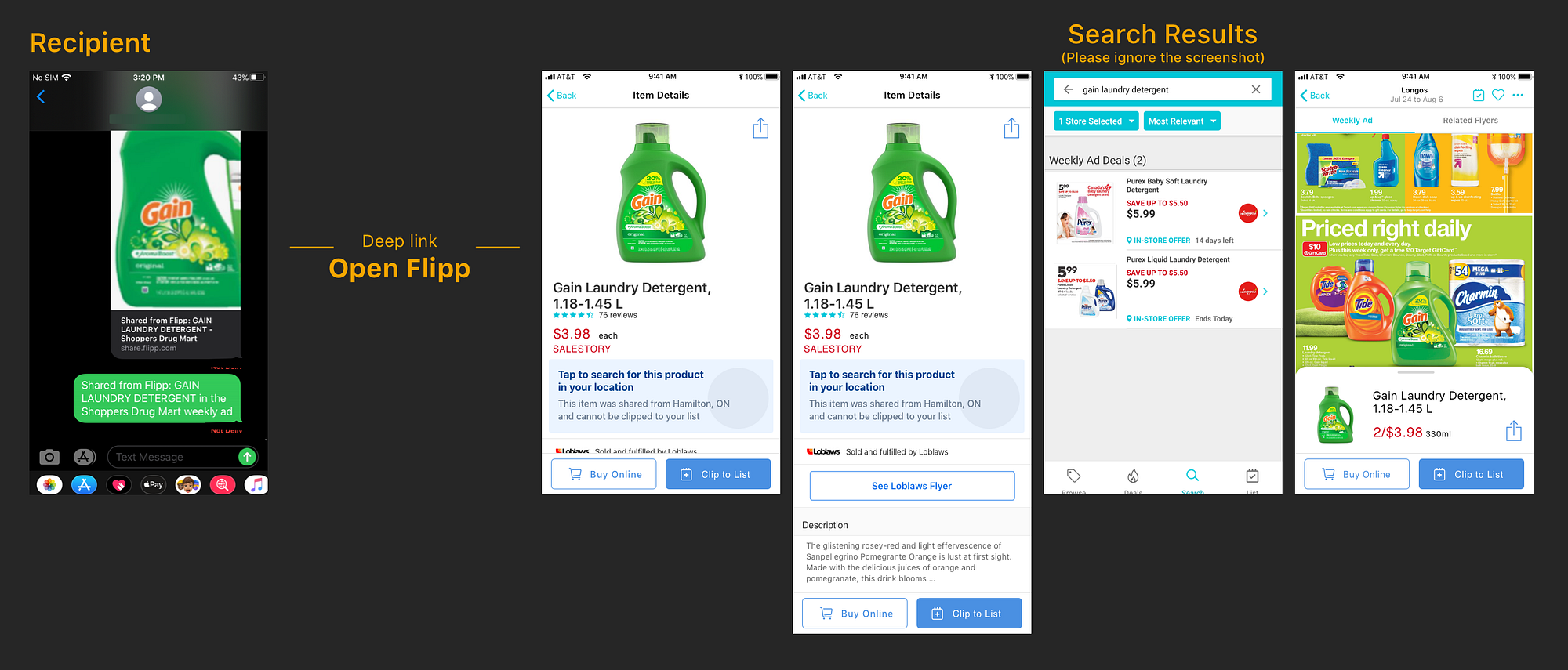
As a brand-new capability, I designed the ideal experience first, then scaled it to what engineering could support. Live dynamic pricing wasn't feasible yet, so we simplified: same-location recipients kept the original experience, and out-of-area recipients could search locally — prioritizing the identical product from the same retailer, then the same product elsewhere, then a comparable regional item.
NON-USERS
Give a stranger a reason to install.
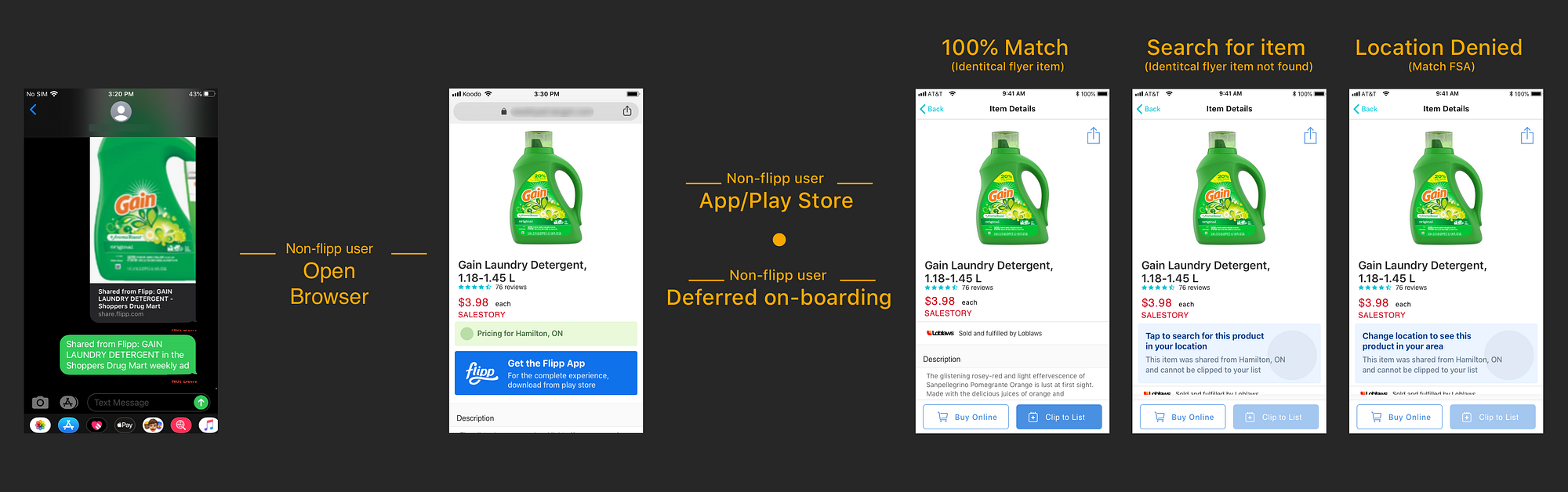
The growth lever lived here. A non-Flipp recipient opens a clean web view of the item with a clear "Get the Flipp App" prompt; after installing, deferred onboarding drops them straight onto the shared product — resolving to a 100% match, a local search, or a location prompt depending on what's available.
WHAT'S NEXT
Scoped, validated, and handed off.
With the MVP scope locked and the team energized about the direction, the plan was to move into user testing. I was laid off the next day, so I didn't get to see it through — but the flows, the location logic, and the acquisition path were designed and ready to build.